
There is a number in a European study of homicides from 2009–2014 that stopped me: Finland’s reported clearance rate was 98.2 percent. It describes a historical period, and police clearance does not mean a conviction.
I came to the question through reporting on missing-person and homicide investigations in Finland. I had already written about the subject for a Finnish police and justice publication, but that figure kept bothering me.
What could explain such a high reported clearance rate — and how much could it tell us about policing elsewhere?
The first possibility was that the number was misleading.
In a way, it was.
But not enough to make it go away.
The 98 percent problem
Comparing crime clearance rates between countries is dangerous.
Definitions differ. Police systems differ. Recording practices differ.
Finland's traditional annual police clearance statistics have a particularly important complication: crimes solved during a given year can include offenses reported in earlier years.
That means the crimes solved in a year do not necessarily belong to exactly the same pool as the crimes recorded that year. In some crime categories, a Finnish annual clearance rate can therefore exceed 100 percent.
So putting a Finnish police statistic beside an FBI number and declaring one country twice as good at solving crime would tell us very little.
Fortunately, researchers have tried to solve precisely this problem.
The European Homicide Monitor uses similar definitions and uniform coding to make homicide data more comparable across countries.
A study of homicides in four Western European countries presented a comparison for 2009–2014, with Swedish clearance data available through 2013. It found striking differences.
The Netherlands cleared 77.1 percent.
Sweden cleared 82.6 percent.
Switzerland cleared 95.0 percent.
Finland cleared 98.2 percent.
The median time required to clear a Finnish homicide was one day.
So the number was not simply a statistical illusion.
In that historical comparison, Finland recorded police clearance of almost every homicide. The study counted both arrests and exceptional clearances, including cases where an identified suspect could not be arrested. It was not a comparison of conviction rates.
For a more recent U.S. reference point, the Bureau of Justice Statistics’ 2025 report, published in October 2026, estimates that 59.5 percent of homicide offenses were cleared by arrest or exceptional means in 2025. This is an offense-based estimate, not a count of victims or incidents. Appendix table 9, page 18.
Those numbers are not directly interchangeable with the European figures. They come from different systems and periods.
But they establish the scale of the question.
What might explain the Finnish record?
The first answer has little to do with police
There is a tempting version of this story in which Finland has discovered some secret method of policing that the United States has somehow missed.
The evidence does not support that story.
Many Finnish homicides have characteristics associated with higher clearance.
Finland's national homicide review covering 2014–2024 describes a pattern dominated by people who know each other, often involving substance use and occurring in private residences.
Forty-five percent of victims were killed by a friend or acquaintance.
Twenty-four percent were killed by a current or former intimate partner.
Thirteen percent were killed by someone previously unknown to them.
In adult homicides, at least one person involved was intoxicated in 72 percent of cases.
The typical weapon remains a kitchen knife.
That matters.
A body found in an apartment where the victim had been drinking with people who can be identified presents investigators with a very different problem from a person shot on a street by an unknown offender who disappears in a car.
The European Homicide Monitor study found the same effect from another direction.
In the Finnish analysis covering 2003–2014, homicides in private settings were more likely to be cleared within 30 days than those in public settings. The Finnish model measured clearance speed because so few cases remained uncleared.
More broadly, the researchers concluded that a substantial part of the variation in homicide clearance between the countries could be attributed to the kinds of homicide prevalent in each country.
So before giving Finnish policing credit for anything, we have to acknowledge an advantage it did not earn: many Finnish homicides have characteristics that make them more solvable.
That explanation is important.
It is also incomplete.
After reading that research, I kept returning to something that happens long before a detective sits down with a suspect.
It happens when the first police officers arrive.
What can disappear in the first minutes
In a written interview on September 10, 2026, I asked Kari Koppanen, a senior constable (ylikonstaapeli) in the operational preparedness unit at Finland’s Police University College, what an ordinary Finnish patrol officer is expected to do at a serious crime scene.
The answer was broader than I expected.
Every officer graduating from the Police University College receives basic training to work independently at a crime or accident scene: documenting the scene, conducting an initial examination, collecting samples, and isolating and protecting the area.
In a serious crime, specialized forensic investigators normally take over.
But they do not arrive first.
The patrol does.
And sometimes evidence cannot wait.
If a trace is at risk of disappearing, or specialists are far away, the first officers may have to act themselves, under specialist guidance when necessary.
I asked what is most easily lost when those first officers make a mistake.
The answer was not DNA.
It was the scene itself.
The expert described it as the authentic situation that existed when the first patrol arrived.
A door that was open.
An object that was moved.
A footprint that was walked through.
A surface that was touched.
A biological trace that was contaminated.
Once the original condition of the scene has been changed, no forensic technology can travel backward in time and restore it.
And this is not merely a Finnish belief.
U.S. National Institute of Justice guidance says crime-scene documentation begins with the first responder and emphasizes recording the condition of the scene as it existed on arrival.
More importantly, American research has found evidence that what the first officers do matters.
An NIJ-sponsored multisite study of homicide investigations found that first responders' actions — securing the scene, identifying potential witnesses and preserving evidence among them — were important to homicide clearance. The speed with which detectives, evidence technicians and medical examiners reached the scene was also associated with clearance.
The principle is therefore not Finnish.
What interested me was the system built around it.
Seventy hours
According to Koppanen, basic police education includes about 70 hours of technical crime investigation, approximately 2.6 ECTS credits. His description combines preparation and practical learning; the figure should not be read as 70 hours of classroom contact alone.
The teaching combines advance study with practical exercises.
This does not turn every Finnish patrol officer into a forensic scientist.
That is not the point.
The point is that an officer does not have to become a forensic specialist before being taught what can destroy a forensic investigation.
The expert I interviewed stressed that the basic education is the same for every graduate.
An officer who later works in Helsinki and an officer who works hundreds of miles north receive the same foundation.
Geography changes what happens next.
In sparsely populated northern and eastern Finland, specialist investigators may be far away. A first patrol may therefore have to do more before help arrives. Equipment carried by patrols can also reflect those distances.
But the basic competence is not supposed to depend on where the officer happens to work.
That becomes interesting when the comparison moves across the Atlantic.
One system and thousands of agencies
There is no American equivalent of Finland's single national Police University College.
The United States has a radically different policing architecture.
The Bureau of Justice Statistics counted 17,541 state and local law-enforcement agencies in 2018. Local police departments alone accounted for 67 percent of them.
American officers are trained through state standards, academies and individual agencies, and many receive crime-scene and evidence training. Some programs are extensive.
This is not a story about American officers being untrained.
Nor would comparing Finland's 70 hours with the number assigned to one course in one American academy prove anything. Curricula are divided differently, investigative subjects overlap, and U.S. requirements vary by jurisdiction.
The difference that interests me is structural.
Finland starts with one national police education institution and a common foundation.
The United States starts with thousands of agencies operating within multiple state and local systems.
That does not tell us which system is better.
But it raises a question:
When the first minutes of a homicide investigation matter, does consistency matter too?
Then DNA complicated the story
At this point, I thought modern forensic science might provide an obvious explanation for Finland's extraordinary clearance rate.
DNA transformed criminal investigation.
A biological trace that would once have told detectives little can now identify or exclude a suspect. Old evidence can solve cases decades after the crime.
But then I looked backward.
DNA testing in Finnish forensic casework began in 1991, according to the background account in government proposal HE 20/1997, section 2.2.1.
Statistics Finland has published clearance figures reaching further back.
For the five-year period 1986–1990, the Finnish clearance rate for manslaughter, murder and homicide was:
97 percent.
That was before DNA testing entered Finnish forensic casework.
From 1991 through 1995, the figure was 94 percent.
From 1996 through 2000, it was 90 percent.
These historical Finnish figures use a different statistical measure from the harmonized European Homicide Monitor data, so they should not be treated as directly equivalent to the 98.2 percent figure.
But for one question, they are remarkably useful.
Whatever explains Finland's long history of high homicide clearance, DNA cannot be the original explanation.
Finland was already reporting clearance of almost every homicide before it had forensic DNA testing.
That changed the story for me.
But what I found next changed it again.
America used to do this too
In 1962, the FBI reported a national homicide clearance rate of 93 percent.
Ninety-three.
By 1994, it had fallen by 29 percentage points.
Criminologists Philip J. Cook and Ashley Mancik call this decades-long fall the Great Decline in their review of the U.S. record.
The decline occurred across U.S. regions and cities of different sizes, although it varied substantially between different categories of homicide.
And there is no single accepted explanation.
The composition of American homicide changed.
Gun homicides with Black victims accounted for much of the national decline. Researchers have also examined changes in case mix, investigative resources and citizen cooperation.
Cook and Mancik offer another important possibility: the operational standard for making an arrest appears to have risen. Although clearance-by-arrest rates declined, they found strong evidence that the likelihood of conviction and imprisonment following an arrest increased.
That is an important warning against treating clearance rate as a pure measure of police competence.
A case marked cleared in one era is not necessarily equivalent to a case marked cleared in another.
Still, the historical comparison leaves us with something remarkable.
Finland did not need DNA to report a homicide clearance rate above 90 percent.
Neither did the United States.
So perhaps the question is not simply:
What did Finland learn to do that America never did?
The historical record suggests a more interesting one:
What was America once able to do that became much harder to sustain?
Before the laboratory
This brings us back to the first patrol.
DNA is extraordinarily powerful.
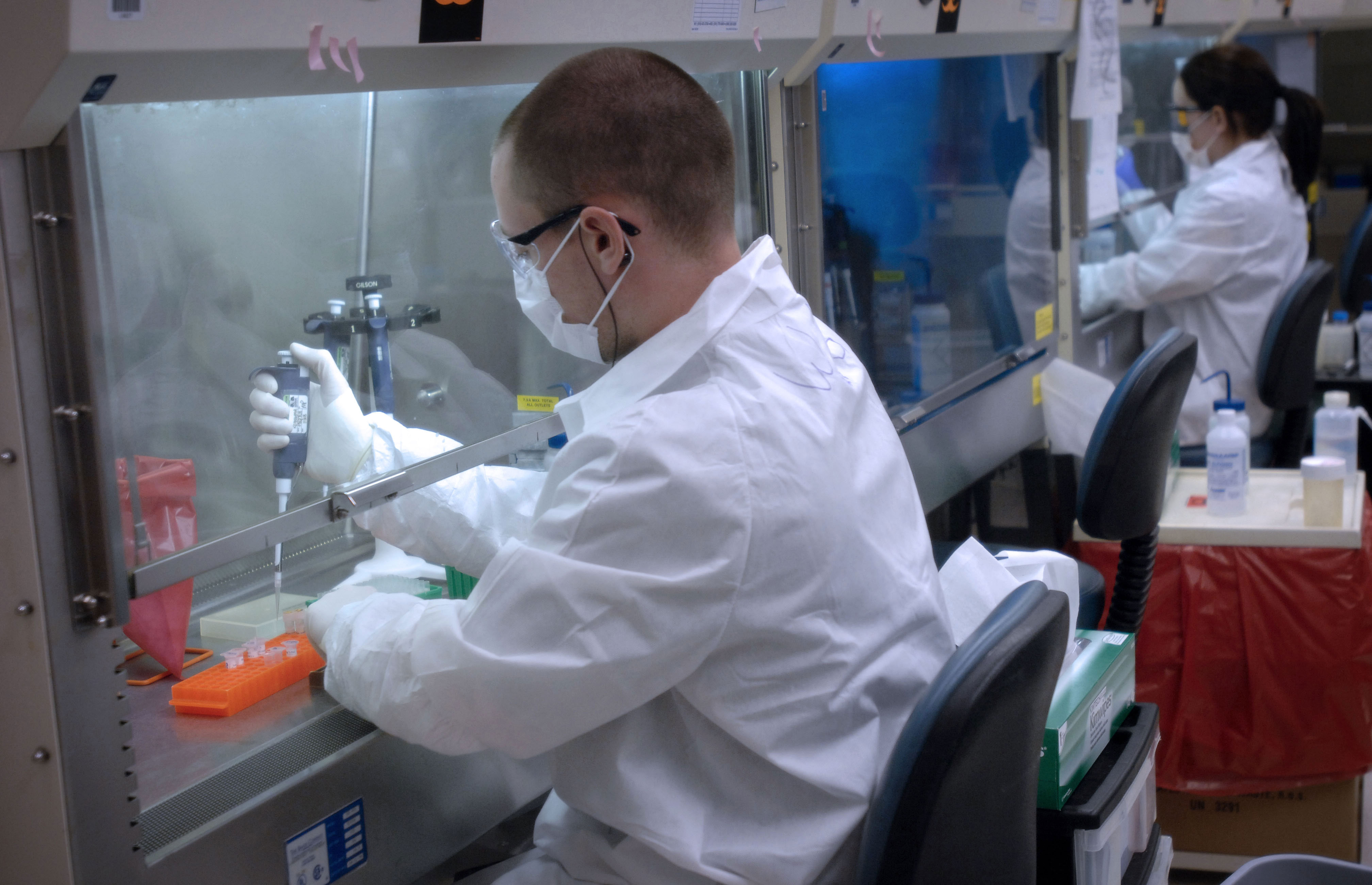
Laboratory analysis of DNA follows the recognition, documentation, collection and preservation of evidence. DNA samples may already be collected by the first patrol.
Before a forensic scientist can analyze biological material, someone has to recognize that it may matter.
Someone has to prevent it from being contaminated.
Someone has to record where it was found.
Someone has to collect it.
Someone has to preserve the chain of custody.
And before any of those things happen, someone has to recognize that the room itself is evidence.
This is why the Police University College expert's answer stayed with me.
The most fragile thing at a crime scene is not necessarily a microscopic trace.
It is the original situation.
Once it is gone, it is gone.
The expert told me that the fundamentals of first-patrol technical crime-scene work have changed relatively little over the past decade. DNA, fingerprints and footwear impressions remain part of the job, while advanced forensic and digital methods continue to evolve.
The laboratory becomes more powerful.
The obligation at the door remains remarkably familiar.
Do not destroy what the laboratory may need.
A laboratory can only examine the evidence that reaches it.
Finland is not a blueprint for America
It would be easy to end the story there.
It would also be wrong.
Finland is a country of roughly 5.6 million people.
The United States has hundreds of millions.
Their geography, histories, gun environments, criminal markets, policing institutions and patterns of violence are different.
The European Homicide Monitor itself warns against simple explanations. Its researchers found that much of the variation in clearance between the European countries they studied could be attributed to the types of homicide prevalent in each country.
Finland benefits from a favorable case mix.
And the historical Finnish figures require another caution.
Statistics Finland's traditional clearance measure compares crimes recorded during a period with crimes solved during that period, including some crimes recorded earlier. That is why a Finnish annual clearance rate can sometimes exceed 100 percent.
The harmonized European Homicide Monitor figure — 98.2 percent for Finland in 2009–2014 — is therefore stronger evidence that the phenomenon itself is real.
What we do not have is evidence that 70 hours of technical crime investigation training causes a 98 percent homicide clearance rate.
We do not have evidence that creating a Finnish-style national police university in the United States would restore the American clearance rates of the 1960s.
And we certainly do not have evidence that American homicide detectives simply became worse at their jobs.
That is not what the research says.
What the evidence gives us is something less satisfying and more interesting.
The number that remains
I started with a number.
98.2 percent.
I expected to find a Finnish explanation for it.
Instead, every answer produced another qualification.
Finnish homicides often have characteristics associated with higher clearance.
That matters.
Finland has a small, nationally standardized police education system.
That may matter.
Every Finnish officer receives basic training in protecting and documenting a crime scene.
That may matter too.
But history removes the easiest explanation of all.
Finland was already reporting a 97 percent homicide clearance rate in 1986–1990, before forensic DNA testing entered Finnish casework.
And America once reported a homicide clearance rate of 93 percent.
The technologies available to investigators have improved enormously since then.
DNA profiling.
Automated fingerprint systems.
Digital surveillance.
Cellphone data.
Databases that investigators of the 1960s could not have imagined.
Yet technology alone did not push homicide clearance inexorably upward.
In the United States, the long-term trend went the other way.
That does not prove that Finland has found the answer.
It tells us that we may be asking the wrong question when we look for the newest forensic technology that will solve the problem.
Some of the decisive moments in a homicide investigation happen before the laboratory, before the database search and often before the homicide detective arrives.
They happen when the first officer steps across the threshold.
Perhaps the useful question is not whether America should copy Finland.
It is simpler than that.
How much does a system gain when the basics are not left to chance?
What this report does not claim
This report does not establish that Finland's national police education system causes its high homicide clearance rate.
It does not treat Finnish and American clearance statistics as directly interchangeable. Definitions, recording practices, case mix and institutional structures differ.
The 98.2 percent Finnish figure comes from harmonized European Homicide Monitor data covering homicides in 2009–2014. The historical Finnish clearance figures use Statistics Finland's national police measure and serve here primarily to establish that very high reported Finnish clearance predates forensic DNA testing.
Nor does the 93 percent U.S. figure from 1962 prove that modern American policing could reproduce that result under modern conditions. The nature of homicide and the standards and practices surrounding arrest and clearance have changed.
The comparison establishes something narrower:
Neither Finland nor the United States needed DNA profiling to report homicide clearance rates above 90 percent.
Why their trajectories diverged is a harder question.
And that is precisely why it is worth asking.