Sources checked November 11, 2026. Older case assessments retain their dates.
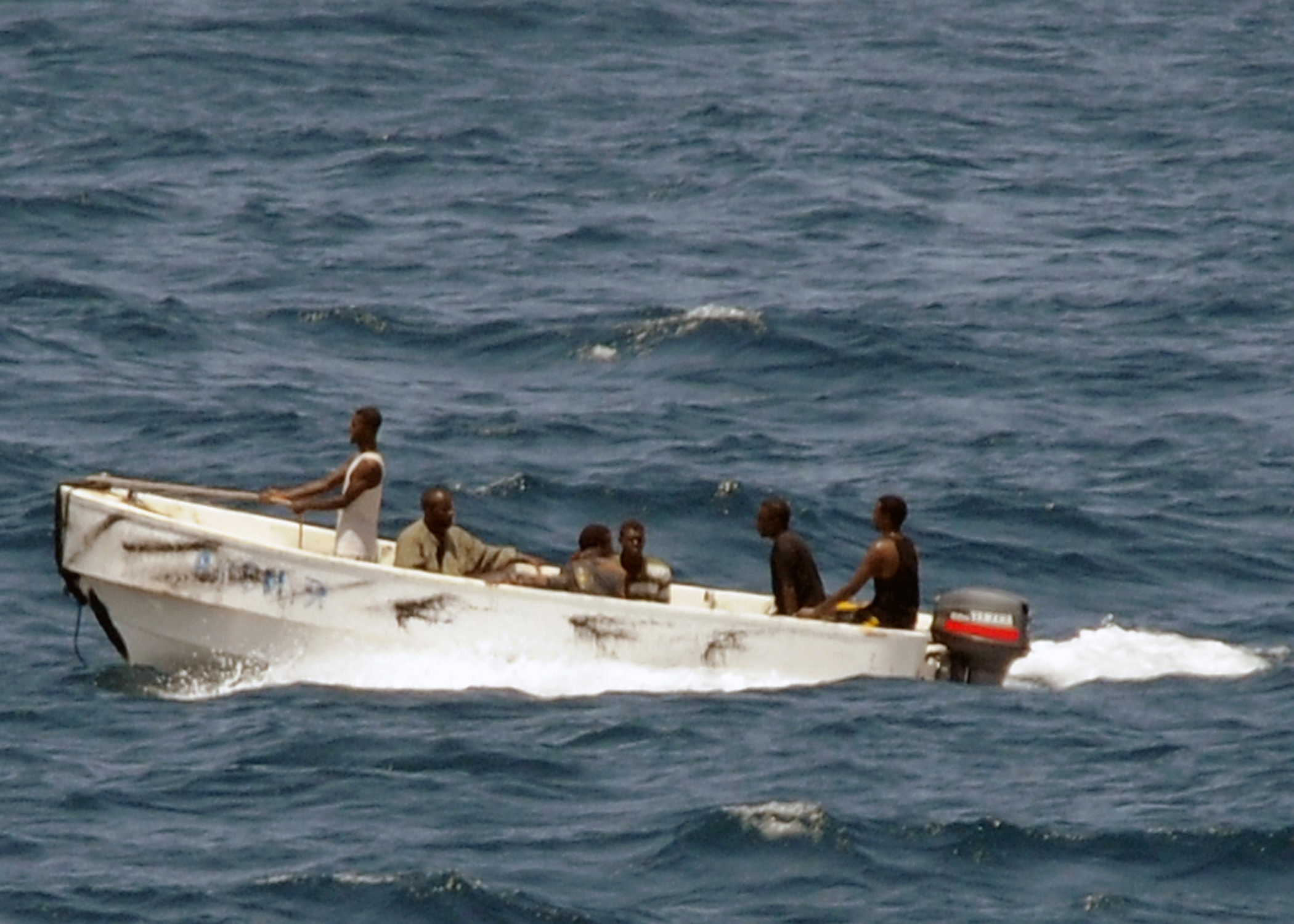
The 21 people aboard the bulk carrier Golden Arsenal survived a pirate attack in the Gulf of Aden in July. They sheltered in the ship’s citadel, a protected refuge, while help approached. An Indian boarding team searched the vessel the following morning, found no attackers and allowed the crew to emerge. The damaged ship continued its voyage. India’s July 2 account
That outcome gives counter-piracy work a concrete purpose: keeping people alive and enabling a ship to reach its destination. But recovering control of a vessel does not, by itself, establish that its crew escaped safely. The distinction matters in assessing the renewed attacks around Somalia and Yemen—and the European and regional response.
Protection can work before a boarding team arrives
Operation Atalanta’s account of the Golden Arsenal response describes a chain involving the ship, its company security officer, the EU operation’s Maritime Security Centre Indian Ocean and partner navies. The master reported armed attackers; the crew raised the alarm and took shelter. Atalanta credited the Indian Navy’s intervention with securing the vessel. Atalanta’s July 3 account
This was a coordinated response, rather than an exclusively European rescue. Giving each participant its proper place helps explain what worked: a crew able to protect itself, a distress report reaching the right people and forces able to respond.
A September incident offers a second example. According to Atalanta, the crew of Glamor shut down the ship’s systems and entered the citadel before attackers boarded. International forces moved toward the vessel, including Japanese reconnaissance flights. The attackers left, and the company reported the crew safe. September 11 operational account
These accounts support the value of preparation and coordinated assistance in those incidents. They do not establish that the same response will succeed in every attack. A crew’s options depend on the circumstances it faces, including how much warning it has and whether help can reach it.
Recovery can carry a terrible human cost
Atalanta’s October 16 update reports five crew deaths in Puntland’s September 29 operation to recover Honour 25. It also records the successful recovery of Sibu 1, whose crew was reported safe. Asana remained under pirate control in the October update; that dated assessment does not establish its position today. Atalanta’s case update
The Honour 25 deaths cannot be made secondary to the ship’s recovery. Nor does an operational summary establish who fired the shots that killed particular crew members. That requires evidence beyond the material reviewed here.
Early reporting also illustrates why initial success claims need follow-up. On September 29, Somalia’s Kaab TV reported Puntland’s announcement of an operation against Honour 25 while explicitly noting that the condition of those aboard was unclear. Kaab TV’s initial report
The questions after an operation must include who survived, who needs treatment and whether families have reliable information. Counting recovered hulls cannot answer them.
A falling global total can conceal a dangerous local threat
The International Maritime Bureau reported 51 piracy and armed-robbery incidents worldwide in January–September 2026, down from 116 in the equivalent period of 2025. Yet it attributed eight hijackings to Somali pirates and warned that the regional threat persisted. IMB’s October 15 assessment
A global fall and serious regional danger can therefore coexist. Neither number supplies a simple verdict on Atalanta or Puntland’s performance. They concern reported incidents across different locations, rather than a controlled comparison of otherwise identical voyages with and without protection.
The denominator matters too. An incident count alone does not show how many vessels faced exposure, which precautions they used or how reporting changed. It cannot tell us how many attacks a patrol prevented. Those limits should discipline claims of success without erasing the documented cases in which crews reached safety.
The work continues ashore
On October 20, EUCAP Somalia, Atalanta’s liaison officer and senior Puntland police representatives met in Bossaso to discuss information-sharing and operational cooperation. EUCAP published the account a week later. EUCAP’s meeting record
The meeting documents an effort to improve coordination. It is too recent to explain the July and September outcomes described above, and a statement of intentions is not an evaluation of results. The useful follow-up is whether information reaches the people who can act on it and whether that changes the outcome for threatened crews.
There is also a legal outcome to establish. An arrest is not a conviction. An earlier case shows the distinction: Atalanta reported that Seychelles convicted eleven men in November 2010 over the attack on the fishing vessel Intertuna 2. Its account described evidence transfer, defense representation and interpreters. Atalanta’s 2010 account
That historical case demonstrates a prosecution pathway; it does not establish the outcome of any 2026 arrest. This review has not verified final judgments for the suspects reported detained in the recent operations.
Counter-piracy performance needs to be followed through separate outcomes: attacks prevented or interrupted, crews brought to safety, injuries and deaths, ships able to resume navigation, and lawful proceedings where the evidence supports them. A warship’s arrival, a recovered tanker and a concluded court case each answer a different question. For the people aboard a threatened ship, the first test remains whether they get home alive.
Sources and method
This analysis compares public operational statements, an industry reporting center’s assessment and journalism. AP’s November 10 report on Atalanta supplied the news lead; the incident comparisons above rely on the linked records. The naval forces and EU missions are participants describing their own work, not independent evaluators. Kaab TV’s initial report also relied on Puntland’s account. Northern Casebook has not interviewed survivors, reconstructed the Honour 25 gunfire or obtained the complete IMB incident dataset. No causal estimate of attacks prevented is claimed. Source checks were completed November 11, 2026; older observations retain their dates.