For people in Finland and Estonia, the value of a security agreement is ultimately practical. Would help arrive when needed? Could hospitals, water supplies and communications keep working while it did? A president’s access to other leaders matters, but those questions require more than a successful conversation.
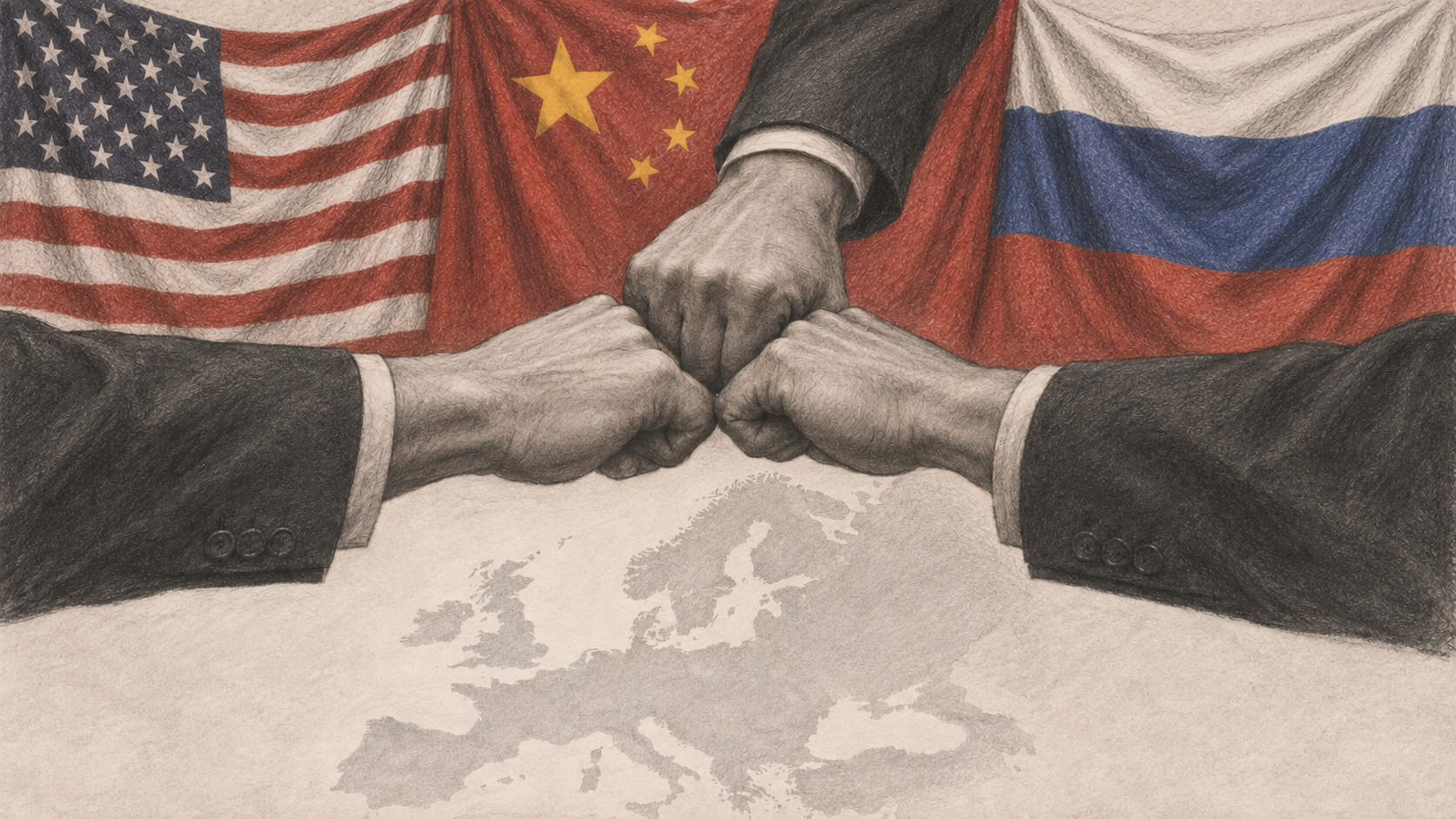
On Thursday, 19 November, Xi Jinping, Vladimir Putin and Donald Trump met in Shenzhen. Their public declaration addressed United Nations reform, refined petroleum supplies, the jurisdiction of international criminal courts and nuclear risks. It did not name Ukraine or announce a settlement of Russia’s war. The published record does not establish an agreement to divide Europe into spheres of influence. (AP’s summit assessment)
That distinction matters particularly in countries living beside Russia. A meeting of great powers can create political pressure without acquiring the legal authority to decide a smaller country’s future. The question is how well the smaller country can withstand that pressure and secure practical support.
What Stubb can influence
After European and other partners met in Berlin, Finnish President Alexander Stubb said Trump had briefed participants on his talks in China and encouraged direct contact with Putin. Stubb rejected the claim that Trump had told Europe to stop supporting Ukraine. These are Stubb’s descriptions of the call, as reported by Yle; they are not a published transcript of Trump’s remarks. (Yle’s report from Stubb’s briefing)
Asked about Trump calling Putin a friend, Stubb pointed to Finland’s reliance on international rules, institutions and membership of the European Union and NATO. His answer connected the country’s limited size with the importance of networks and shared information. That is a description of how Finland seeks influence, rather than proof that it controls the outcome of negotiations. (Yle)
Stubb has an important constitutional role. Finland’s president leads foreign policy in cooperation with the government, and significant foreign-policy decisions are made together with it. Parliament also has constitutional authority over significant international obligations. A personal relationship between presidents cannot replace those institutions. (Office of the President of Finland)
There is no defensible numerical answer to how much Stubb’s word “weighs”. Access can help Finland explain its concerns and build support. The result has to be judged in agreed decisions and their implementation.
A small member can withhold consent
NATO does not decide by a majority vote weighted by population. Its decisions are reached by consensus among sovereign member countries. Finland can object to a proposed NATO decision; a larger ally cannot simply outvote it. That is a real institutional protection for a small state. (NATO’s explanation of consensus)
It is also a specific kind of power. Withholding consent to an alliance decision does not give Finland command of another country’s armed forces or budget. Nor does the consensus rule give Helsinki control over talks that other governments conduct outside NATO. This follows from the distinction between collective alliance decisions and sovereign national choices.
Finland also has a treaty-based route to consultations when it considers its security threatened: Article 4. The ability to raise the alarm and require discussion is part of membership, rather than a favour granted through a leader’s personal contacts. (North Atlantic Treaty, Article 4)
A promise of assistance needs a means of delivery
Article 5 creates an obligation to assist an ally that suffers an armed attack. Each ally takes the action it considers necessary, which can include armed force. NATO’s own explanation says assistance may or may not involve military force and recognises national constitutional procedures. The treaty does not promise an identical military response from every member. (NATO on collective defence)
This makes the availability, preparation and coordination of assistance essential to judging the promise. Formal consent and practical capability answer different questions. A small country needs both a say in decisions and allies able and willing to carry them out.
Finland and Estonia are NATO members. Ukraine is not covered by the alliance’s collective-defence commitment. Proposals for security guarantees for Ukraine must therefore be assessed on their own terms. The German government’s description of the Berlin meeting identifies robust guarantees after a ceasefire as an objective, including preparations for a multinational force. That description alone does not establish that such a force has been deployed or a final guarantee has entered into force. (German government, NATO on membership and partners)
Who speaks for the smaller countries?
Europe’s own negotiating arrangements deserve scrutiny. The planned European representation combines EU institutions with the E5: France, Germany, Italy, Poland and the United Kingdom. Finland and Estonia are not among those five. Their influence depends in part on how common positions are agreed and represented.
Estonia’s Prime Minister Kristen Michal says EU representatives must coordinate and represent member states’ jointly agreed positions. He rejects rewriting European security arrangements at Russia’s request. Small states are asserting a position; their success in future negotiations remains to be tested. (Estonian government, 14 November)
Research professor Mikael Mattlin told Yle that arrangements in which great powers decide neighbouring countries’ security without those countries could acquire features of the wartime Yalta settlement. His warning was conditional. It should not be converted into a report that a new division of Europe has already been agreed. (Yle’s interview with Mattlin)
The public test is what keeps working
Finland’s official preparedness guidance already asks households to consider interruptions to electricity, water, internet access and banking. Its recommendation to keep essential supplies for at least three days applies to many kinds of disruption. It is not evidence that an attack on Finland is imminent. (Suomi.fi’s preparedness guidance)
For citizens, this is where diplomacy becomes accountable. Which commitments have their own government accepted? Which capabilities and resources support them? Who is responsible for maintaining essential services while assistance is organised?
Some operational details must remain confidential. Governments can still explain the legal commitments, political choices, responsibilities and resources that underpin public safety. Those are concrete tests against which a small country’s influence can be judged.
Stubb’s conversations are one part of that work. The enduring measure is whether Finland’s institutions and alliances turn their promises into protection for the people who have to live with the consequences.
Reporting note: This analysis draws on public documents and attributed news reports. Closed summit discussions and military contingency plans were not independently examined. The accompanying AI-generated illustration is symbolic.
Found this useful?
Northern Casebook is free to read. If this story helped, you can support the work with a voluntary contribution. Support does not buy a say in topics, headlines or conclusions.
Support Northern Casebook · Send feedback or a correction · Books by Jaakko Rautio