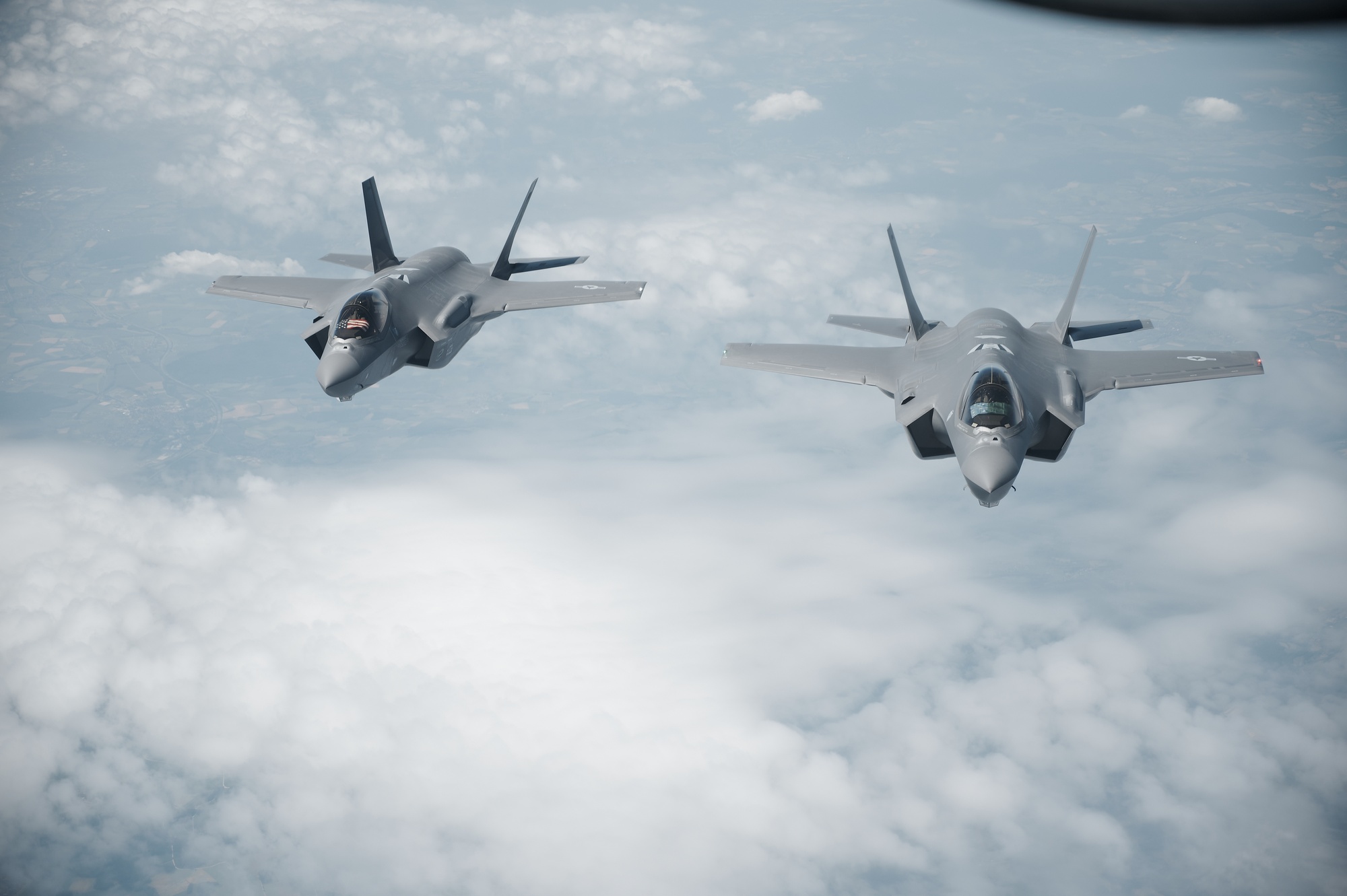
Finland’s coastal residents have already heard how the war reaches across the Gulf of Finland. On March 31, Yle reported fighter aircraft being heard in Kotka and Hamina as Finland strengthened surveillance following drone incursions. The military described surveillance and identification flights as almost daily at that time. That is a dated account of the spring situation, rather than a measure of November’s flying activity. Yle’s reporting
The risk is also visible in a less dramatic place: a navigation display. Traficom, Finland’s transport and communications authority, warns that satellite positioning can be disrupted or show a false location. In narrow archipelago waters, the ability to check a position independently matters to a person making a routine boat journey as well as to a commercial crew. Traficom’s boating guidance
These are connected consequences of a war whose effects extend beyond its battlefields. The Baltic’s security increasingly depends on the relationship between military protection and the civilian systems that keep daily life moving. A stronger deterrent must be accompanied by usable warnings, reliable alternative routes and the ability to restore damaged services.
Oil exports bring commercial and military interests together
Ukraine’s attacks on Russian energy infrastructure are one reason the Gulf of Finland has become so exposed to the war’s effects. On November 13, Estonian military officer Colonel Aron Kalmus described multiple drone hits on a Russian warship during the November 11 attack on Ust-Luga. His account, reported by ERR, placed military vessels and oil-export infrastructure within the same attack episode. The damage assessment remains the Estonian military’s account. ERR’s briefing report
The widely circulated figure of 30 percent needs a precise definition. Reuters reported on November 10 that refineries affected by recent attacks represented about 300,000 metric tons of daily nominal processing capacity, against a Russian total of roughly 930,000. This concerns refining capacity affected by disruption, rather than proof that a third of Russia’s crude-oil production has been permanently destroyed. Reuters, published by MarketScreener
The strategic pressure is nevertheless clear. An attack on a refinery, an export terminal or a tanker threatens a different part of the chain that turns Russian energy into revenue. Protecting that chain can require air defense, surveillance and naval escorts. It does not follow that disrupted refining automatically means more tankers sailing through the Baltic: crude oil and refined products can move differently, and damaged terminals can constrain exports.
Russia was already using warships and fighter aircraft to accompany shadow-fleet tankers in 2025, according to Lithuania’s 2026 national threat assessment. The escort pattern therefore predates the latest refinery strikes. Sanctions enforcement and attempts to inspect vessels are also part of the confrontation. Lithuania’s threat assessment
The important change for coastal security is that a commercial encounter can involve military protection. A boarding attempt, unsafe maneuver or dispute about a vessel’s registration can bring armed forces into close proximity. Recent energy strikes may add to the pressure to protect shipping, but the scale of any increase in escorts caused specifically by those strikes remains uncertain.
The shadow fleet is the shipping network used to move Russian energy around sanctions restrictions, often through opaque ownership arrangements. Lithuania’s threat assessment
Vessel condition, crew competence and the adequacy of insurance matter alongside the cargo’s origin. In January, the region’s coastal states called for compliance with international safety and financial-security requirements. Coastal states’ joint letter
An oil spill would put the danger on the shoreline, with potential consequences for fishing, recreation and coastal businesses. Environmental readiness therefore belongs in the security response even when there is no evidence of deliberate sabotage. The coast needs the ability to contain an accident as well as to deter an attack.
What NATO can protect at sea
NATO launched Baltic Sentry in January 2025 to strengthen the protection of critical undersea infrastructure. Its announced assets included frigates, maritime patrol aircraft and naval drones. The task is to improve surveillance, deterrence and the ability to respond to threats against cables and other infrastructure. NATO’s announcement
Last week’s Dynamic Merlin 26 exercise addressed a related military requirement. Eight allied countries trained off Sweden from November 9 to 13, using submarines, surface ships and aircraft to practice anti-submarine warfare. The exercise also included counter-drone and missile scenarios, according to the commanders interviewed in Stockholm by the UK Defence Journal. Swedish Armed Forces, original reporting from the exercise
The distinction matters. Baltic Sentry is an infrastructure-security activity; Dynamic Merlin was a training exercise. National air surveillance and NATO’s air-policing missions have their own responsibilities. An aircraft heard from a coastal home cannot be assigned to one of these tasks simply from its sound.
A naval presence can discourage hostile action and help detect a dangerous vessel. Once a cable is damaged, however, repair ships, operators, spare equipment and functioning alternatives determine how quickly its service returns. Military protection and civilian preparedness support each other.
Aircraft noise belongs in the security discussion
For a coastal resident, the purpose of an aircraft and the disturbance it causes are different questions. A necessary surveillance flight can still interrupt rest, a conversation or work at home. Those possible everyday effects deserve clear public information; they should not be presented as measured health damage without evidence.
There is also a practical reason to explain scheduled training. Finland’s Protective Fence 26 exercise is announced for November 19–27. Its published flying area includes the Bothnian Bay, and the November 22–24 phase includes flying around the clock. Advance notice allows residents to understand an increase in aircraft activity without treating each flight as a new emergency. Air Force exercise information republished by Kuopio
Finland’s transition to the F-35 adds another reason to be precise. The Air Force reported that four Finnish F-35As had arrived in the country by October 23. Delivery, training and operational readiness are different milestones; that arrival announcement does not establish that Finnish F-35s are flying the current drone-surveillance missions. Finnish Air Force
Authorities can explain an exercise schedule and how residents can report disturbance while protecting operational details. The public needs enough information to distinguish planned activity from an alert and to understand what action, if any, is expected of them.
A warning must reach the person steering the boat
The civilian challenge is especially clear in the archipelago. A merchant ship and a small private boat do not necessarily carry the same equipment or receive information in the same way. A short journey to a home, a fishing place or a service on another island still requires dependable navigation.
Electronic protection can also spread the war’s effects across the water. In April, Traficom said interference originating in Russia was connected to efforts to protect critical sites. Measures intended to impede an attacking drone can therefore create navigation problems for civilian users beyond the defended area. Traficom’s April assessment
Traficom recorded 406 vessels experiencing satellite-navigation interference through October 2026, with the reported waterborne incidents located in the Gulf of Finland. The figure is not a count of accidents. It also cannot be directly compared with the previous years’ totals: the published measure changed from reports to affected vessels at the start of 2026. Traficom’s situation picture
Turku Radio, Finland’s coastal safety-radio station, broadcasts navigational warnings on its VHF working channels. Fintraffic also provides an online warning service. These are complementary routes to information; a warning posted online does not by itself show that a person already at sea has received it. Fintraffic’s safety-radio service
Traficom’s November 11 warning instructions make a useful distinction. Satellite-navigation disruption is a subject for coastal warnings, which are broadcast by radio. A separate category for warnings to boaters is distributed online and through a digital data service. It would therefore be misleading to claim that GPS warnings are available only on the internet. The practical issue is whether the relevant warning reaches the right users in time. Maritime warning instructions, section 3 and appendix 2
For the boat operator, preparation means current charts and the ability to navigate without satellite positioning. Communication needs its own alternative: Traficom recommends equipment such as marine VHF because mobile networks are not designed to cover all sea areas. A GPS problem does not automatically mean that voice radio or mobile communications have also failed. Traficom’s boating guidance
For authorities and boating organizations, the test is the whole information chain. Is the warning understandable, available before departure and accessible during the journey? Can a harbour or a local boating club help pass it on? The effectiveness of that chain determines whether information becomes practical protection.
Damaged cables require evidence and recovery capacity
Security decisions also depend on identifying what actually happened. On November 5, Helsinki District Court convicted the Fitburg’s captain and boatswain over intentional cable damage in the Gulf of Finland on December 31, 2025. The court’s release states that the judgment is not final. It describes the defendants’ criminal responsibility; it does not establish a Russian state order. Court release
Other cases have produced different conclusions. In February 2025, Swedish prosecutors ruled out sabotage in the Vezhen cable case. The lesson is to investigate individual incidents, rather than turn every damaged cable into proof of the same campaign. Swedish Prosecution Authority
The physical repair is a separate test. The EstLink 2 electricity interconnector between Finland and Estonia returned to commercial use on June 20, 2025. Elering’s repair account describes months of preparation and the need to adapt specialist vessel equipment. Restoration depends on work that must begin well before the next emergency. Fingrid, Elering’s repair account
For households and businesses, the relevant outcome is continuity. The consequences of a lost electricity link depend on the rest of the grid and available generation; a damaged data cable may be partly compensated for by other connections. A cable incident alone cannot establish a particular household’s power cut or price increase. The useful questions concern remaining capacity, repair time and the cost of keeping services working.
Estonia shows both the value and the cost of prevention
Estonia’s government says an attempted attack on the defense company Threod Systems was prevented on November 14 without injuries or interruption to production and deliveries. The authorities attribute the attempt to Russia’s military intelligence service, the GRU. That attribution is the Estonian authorities’ assessment. The reported operational result also matters: the company continued working. Estonian government
On November 15, Estonia’s foreign ministry announced that the government plans to close its road border crossings with Russia from December 1. The announcement concerns road crossings; it is not a declaration that Baltic shipping will stop. Estonian foreign ministry
A closure would make security policy concrete for people whose family journeys or transport work use those crossings. Clear notice about timing, scope and any exceptions is therefore part of implementing the security measure itself. Restriction can reduce one route of risk while creating costs for people who did not cause the threat.
Keeping the sea open requires restraint as well as readiness
The diplomatic task is to preserve predictability alongside military readiness. Finland’s presidential office says that Alexander Stubb and Norway’s prime minister, Jonas Gahr Støre, stressed regional stability in their October 27 call with Vladimir Putin. The call was held in consultation with Ukraine, and the two leaders reiterated their support for it. Finnish presidential office
The danger suggested by comparisons with the Strait of Hormuz is that routine commercial passage becomes an instrument of military pressure. The Baltic has its own geography and legal circumstances, but the need to keep shipping safe is plain. Freedom of navigation, lawful enforcement and protection from intimidation must be addressed together.
For a coastal community, the measure of success is a working day that can proceed: a boat journey made safely, a port able to operate, a warning understood, a damaged connection restored. Preventing hostile action helps protect all of these. So does explaining necessary restrictions and avoiding escalation based on an unproven assumption.
The Baltic needs a credible military deterrent and the civilian capacity to keep living with the sea. The everyday task is to make those protections work together, so that uncertainty does not quietly become a permanent burden for the people on its shores.
Found this useful?
Northern Casebook is free to read. If this story helped, you can support the work with a voluntary contribution. Support does not buy a say in topics, headlines or conclusions.
Support Northern Casebook · Send feedback or a correction · Books by Jaakko Rautio